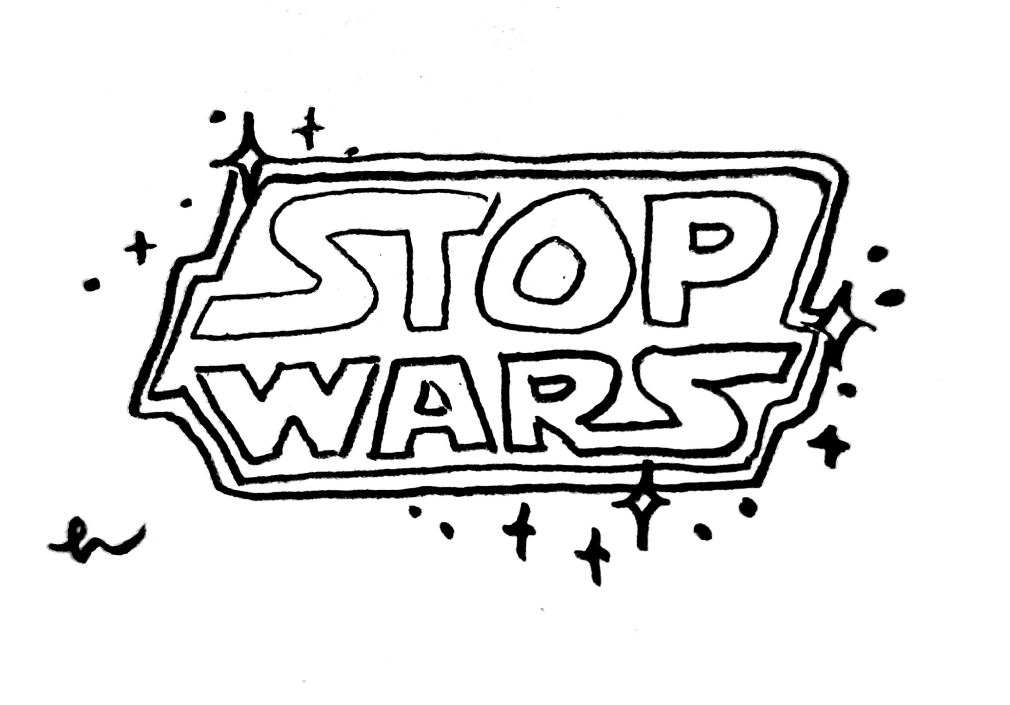
Money and War: What Are We Really Witnessing in a Repeating System
War appears to begin with guns and missiles, but at its core, it always starts with money.
The tensions surrounding the United States, Israel, and Iran are not merely political conflicts. There are competitions over resources, influence, control, and financial order.
On the surface, we hear words like “security” and “justice.”
But beneath them lies a far colder calculation.
Energy supply chains, the defense industry, dollar dominance, and regional power
All of these elements intertwine to form a massive market.
And that market is called war.
Whenever war breaks out, someone always profits.
Weapons manufacturers receive more orders, energy prices surge, and financial markets create new opportunities.
Chaos is risk, but it is also profit.
Within this structure, we are forced to confront an uncomfortable truth:
War is a tragedy, but it is also an industry.
If we look deeper, war is not just a clash between nations.
It is also the process of constructing a narrative.
Each country frames itself as a defender or a guardian of justice.
Complex geopolitical realities are simplified into stories of good versus evil.
In this process, the public is emotionally mobilized, while capital quietly moves in the background.
In the end, war exists on two levels:
above, ideologies and justifications collide;
Below, money flows.
But there is an even more unsettling truth.
This structure repeats itself.
Throughout history, leaders who promised to end wars have continuously emerged
Yet they are always replaced by new “war makers.”
War is not simply the problem of individuals;
It is part of a system humanity itself has created.
Economies demand growth,
growth creates tension,
and tension ultimately leads to conflict.
And that conflict, in turn, generates more money.
This cycle does not break.
So we are left with a difficult question:
“Is peace truly a realistic goal?”
Perhaps peace is not the default state of humanity,
but rather a temporary exception.
Wars repeat,
crises return in cycles,
and within them, money moves again.
From this perspective, peace begins to look
not like a sustainable condition,
but like a luxury one that is too expensive to maintain.
So what are we supposed to do?
To be blunt, changing this structure entirely is beyond the power of any individual.
But one thing is clear:
Those who understand the flow of this system
will have different outcomes from those who are consumed by the narrative.
When war is consumed as news,
some people feel fear,
while others search for opportunity.
Because money does not move according to emotion—it follows structure.
In the end, we must confront a harsh reality:
War does not disappear.
War makers continue to emerge.
And peace is far more costly than we would like to believe.
The moment we accept this truth,
We arrive at a final question:
“Will I remain a passive observer within this system,
Or will I become someone who understands the flow?”